Course Overview
This course has four components:
An external SQA exam is sat at the end of the course and a Project must also be completed.
The standalone Higher Statistics unit award is embedded within this course.
The software packages R Studio and Excel are used.
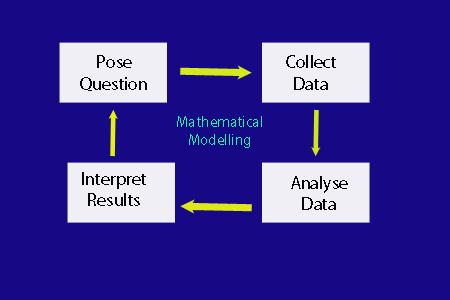
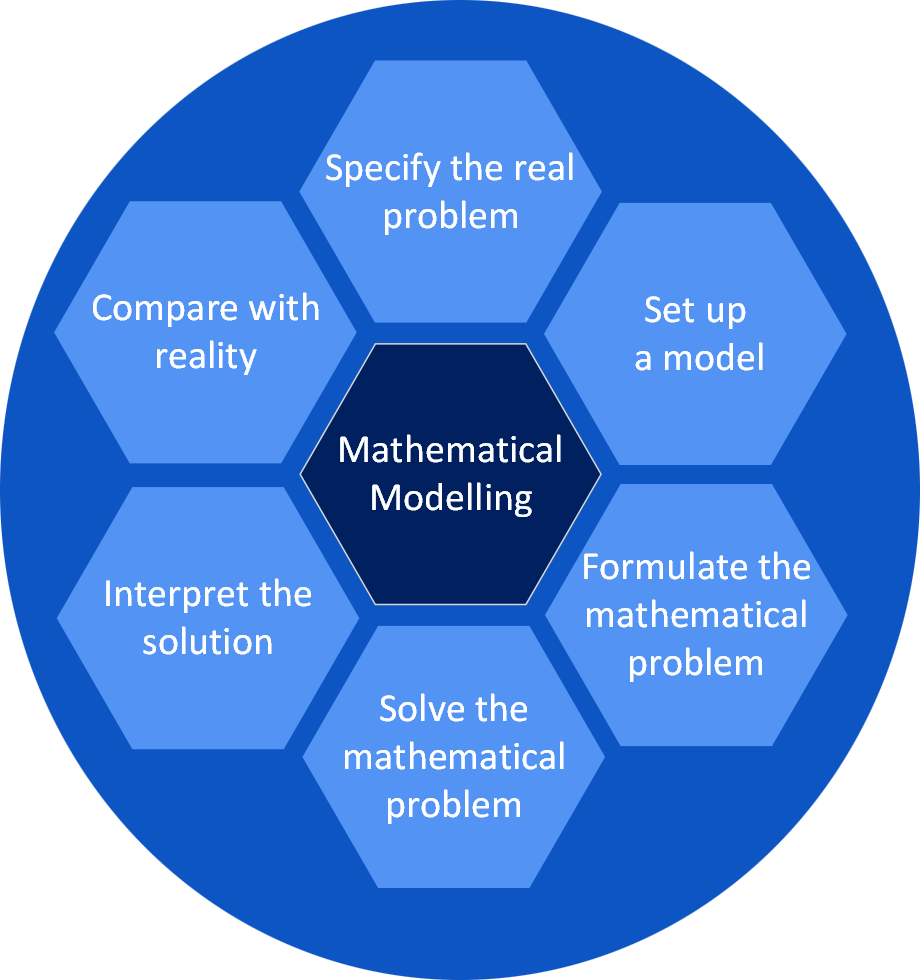
Mathematical Modelling
Key Subskills
- Modelling a situation mathematically in a given context
- Defining appropriate units of measure for variables and checking for consistency
- Evaluating the effects of error and tolerances within mathematical models
- Evaluating and interpreting the output of mathematical models
- Analysing mathematical models and suggesting possible improvements
- Using software effectively in calculations
Statistics and Probability
Key Subskills
- Applying statistical skills to basic probability
- Applying statistical literacy skills to data
- Applying statistical skills to correlation and linear regression
- Applying statistical skills to data analysis, interpretation and communication
Refresher: National 5 Apps Statistics
Excel & Scattergraphs
Statistical Tests
Probability
Useful Data Sources
Finance
Key Subskills
- Applying mathematical skills to calculating present and future values of monetary payments
- Applying mathematical skills to solving problems related to personal financial products and transactions
- Analysing the results of financial calculations
- Applying personal financial planning skills
Finance Topics & Resources
Sequences & Recurrence Relations
Planning and Decision Making
Key Subskills
- Understanding and applying project planning and decision making
- Representing compound projects using activity networks (e.g., PERT charts)
- Using systematic methods to find early and late times for activities
- Identifying critical activities and finding critical paths
- Using Gantt charts to represent project activities
- Understanding and interpreting risk using expected value
- Applying expected value to real‑life contexts
Planning Tools & Resources
Learning Outcomes
Mathematical Modelling — Learning Outcomes
- Modelling a situation mathematically in a given context
- Defining appropriate units of measure for variables and checking for consistency
- Evaluating the effects of error and tolerances within mathematical models
- Evaluating and interpreting the output of mathematical models
- Analysing mathematical models and suggesting possible improvements
- Using software effectively in calculations
Planning and Decision Making — Learning Outcomes
- Understanding and applying project planning and decision making
- Representing compound projects using activity networks
- Using systematic methods to find early and late times for activities
- Identifying critical activities and finding critical paths
- Using Gantt charts to represent project activities
- Understanding and interpreting risk using expected value
- Applying expected value to real‑life contexts
Finance — Learning Outcomes
- Applying mathematical skills to calculating present and future values of monetary payments
- Applying mathematical skills to solving problems related to personal financial products and transactions
- Analysing the results of financial calculations
- Applying personal financial planning skills
Statistics and Probability — Learning Outcomes
- Constructing tree diagrams and Venn diagrams
- Carrying out basic calculations involving combinations of events
- Constructing and interpreting statistical diagrams
- Interpreting the distribution of data (symmetry, normality, skewness)
- Deriving, understanding, and interpreting sample measures of location and dispersion
- Interpreting and constructing scatter plots
- Using simple linear regression
- Interpreting slope and intercept parameters
- Using linear models for prediction
- Assessing the accuracy of predictions
- Understanding and interpreting correlations
- Understanding applicability of Pearson’s correlation coefficient
- Exploring trends in data
- Formulating research questions
- Interpreting and reporting results of hypothesis tests
- Generating and interpreting confidence intervals
- Performing simple analysis using t‑tests and paired t‑tests
- Using z‑tests for two proportions
- Understanding how errors can arise in statistical testing
- Relating hypothesis test results to the original research question
Useful Links
Maths.scot
Free Maths resources for Scottish Secondary students
Clelland Maths
Free maths resources and App
Books
Printed resources available at Amazon
As an Amazon Associate I earn from qualifying purchases.