The Straight Line
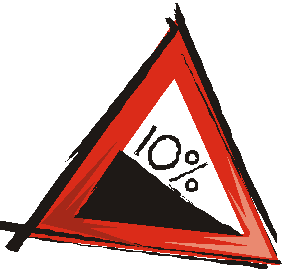
A straight line is the shortest distance between two points.
The gradient of a line is a measure of its slope relative to the x‑axis.
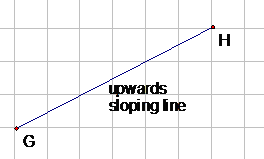
A positive gradient slopes upwards from left to right.

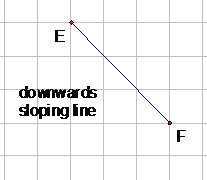
A negative gradient slopes downwards from left to right.

Gradient
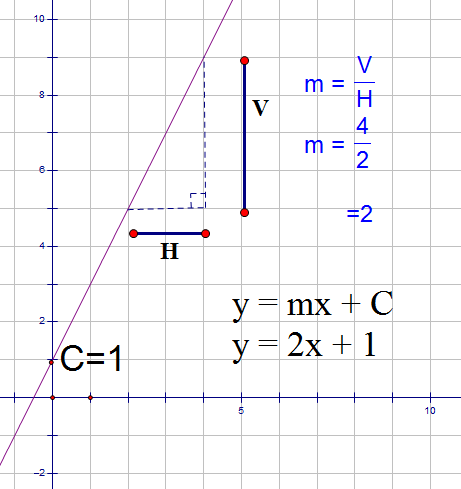
The gradient is found by dividing the vertical distance by the horizontal distance.
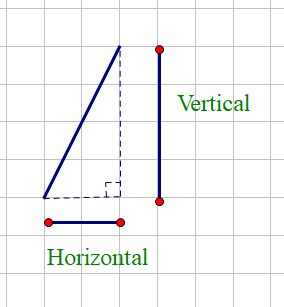
The horizontal distance is 2 units. The vertical distance is 4 units.
The gradient is 2.
Gradient Triangle
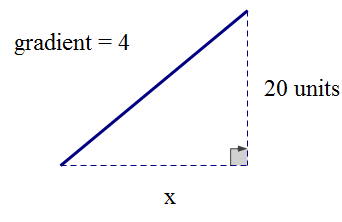
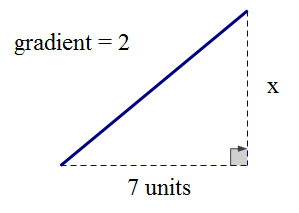
The gradient triangle can be used to find a vertical, horizontal, or gradient.
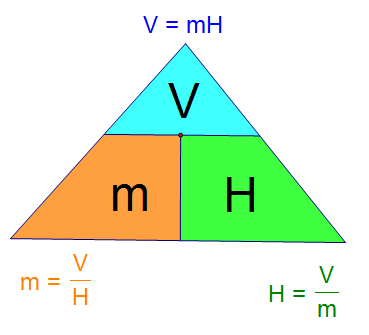
Find gradient given vertical and horizontal
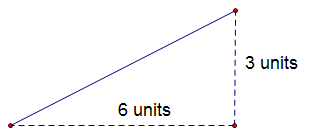
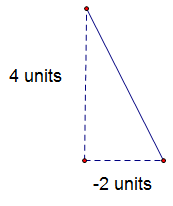
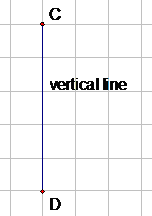
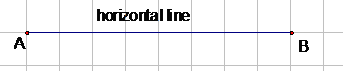
Find horizontal given vertical and gradient
Find vertical given horizontal and gradient
Drawing a Line from its Equation
To draw a line from its equation:
- Draw a table with x and y.
- Pick values for x.
- Substitute each x into the equation to find y.
- Plot the points (x, y).
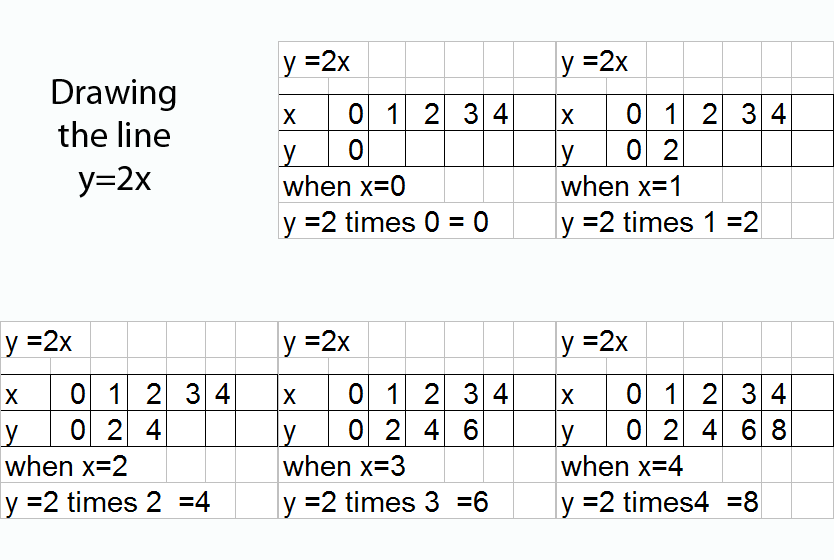
This gives the points:
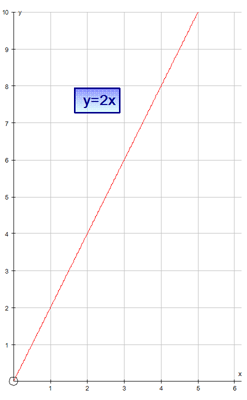
(0,0), (1,2), (2,4), (3,6), (4,8)
Plotting these points gives:
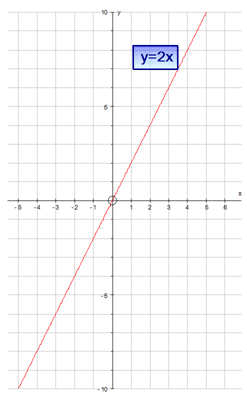
Extrapolating backwards:
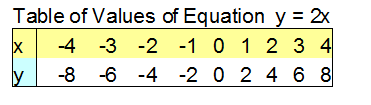
The line y = x has values:
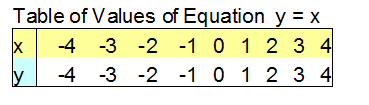
And graph:
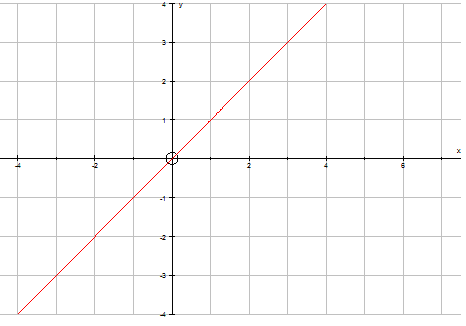
Harder lines
- Draw a table with x and y.
- Pick values for x.
- Multiply x by the coefficient, then add/subtract the constant.
- Fill in y.
- Plot the points.
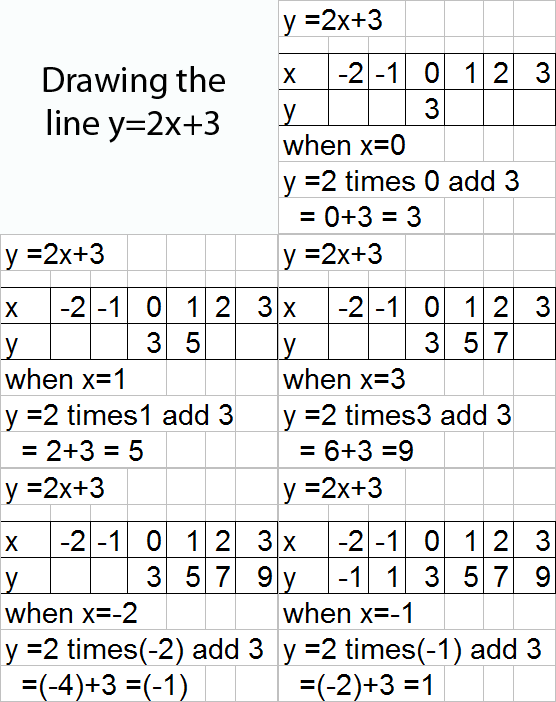
The line y = 2x + 3
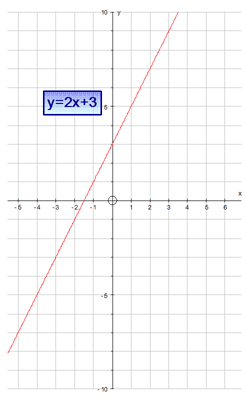
The Equation of a Straight Line
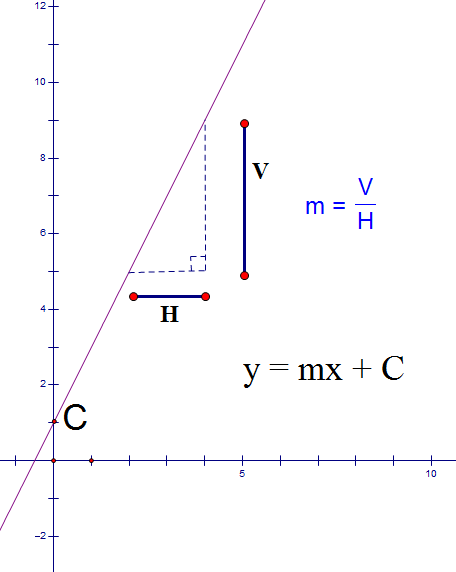
Where \( m \) = gradient and \( c \) = y‑intercept (the value of \( y \) when \( x = 0 \)).