Square Numbers
To square a number, multiply it by itself.
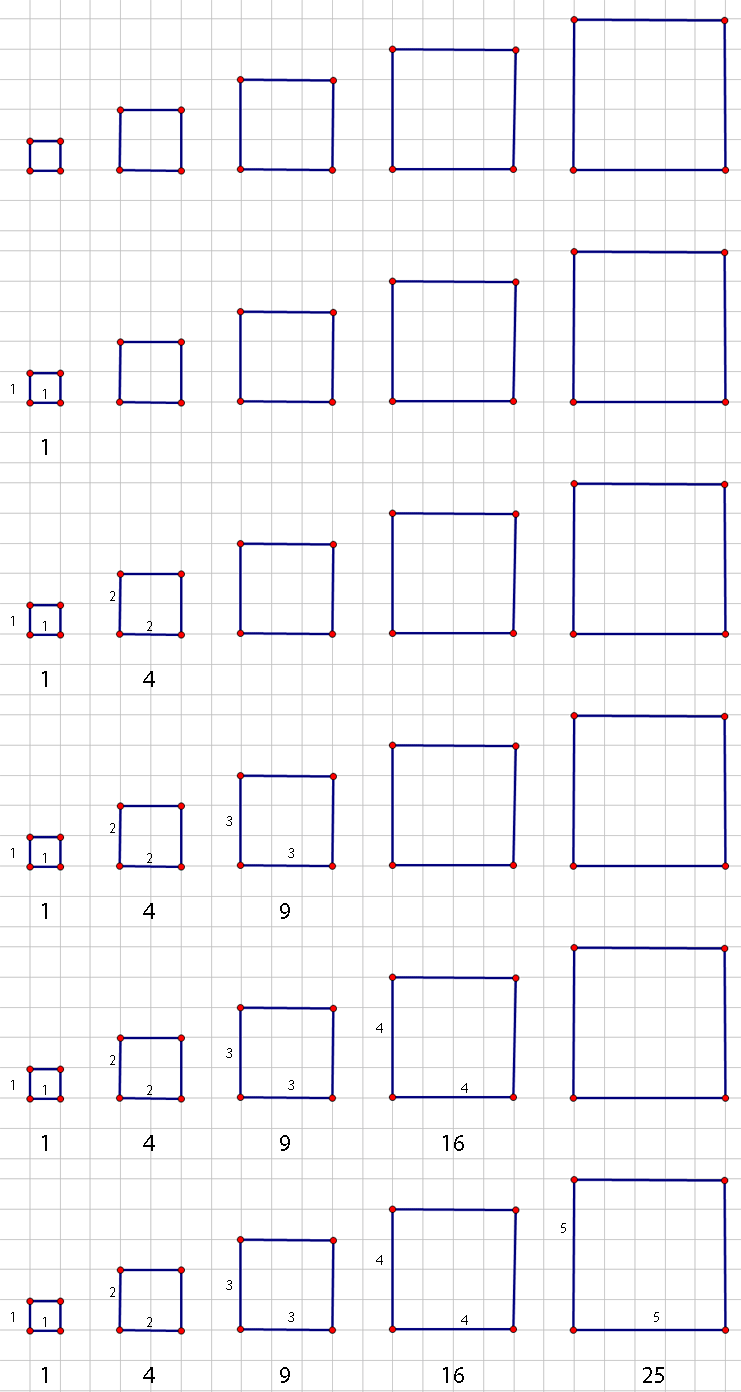
Examples:
\[ 1^2 = 1 \times 1 = 1 \] \[ 2^2 = 2 \times 2 = 4 \] \[ 3^2 = 3 \times 3 = 9 \] \[ 4^2 = 4 \times 4 = 16 \] \[ 5^2 = 5 \times 5 = 25 \]Note: you are NOT multiplying by 2
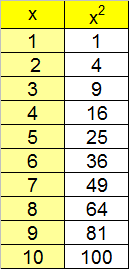
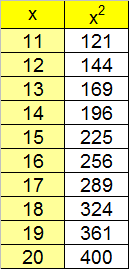
First 50 Squares
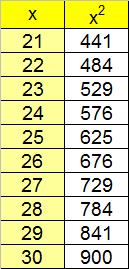
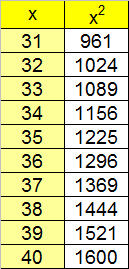
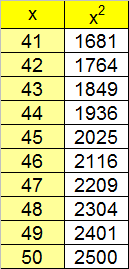
Squaring a number is also called raising it to the power of 2.
Examples of other powers:
\[
2^3 = 2 \times 2 \times 2 = 8
\]
\[
3^4 = 3 \times 3 \times 3 \times 3 = 81
\]
\[
10^5 = 100\,000
\]
\[
4^1 = 4
\]
\[
7^0 = 1 \quad (\text{any non-zero number to the power 0 equals 1})
\]
Square Roots
The square root of a square number is the value that was multiplied by itself to make that square.
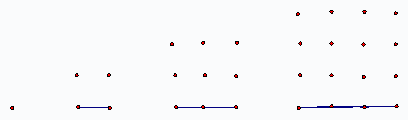
The square root, multiplied by itself, gives the original number.
The special symbol for square root is: √
Examples
Example 1
\[ \sqrt{4} = 2 \] \[ \text{because } 2 \times 2 = 4 \]Example 2
\[ \sqrt{9} = 3 \] \[ \text{because } 3 \times 3 = 9 \]Example 3
\[ \sqrt{16} = 4 \] \[ \text{because } 4 \times 4 = 16 \]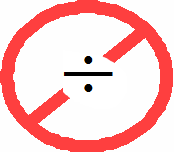
Note: you are NOT dividing by 2!
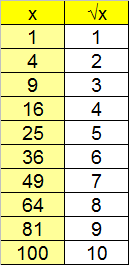
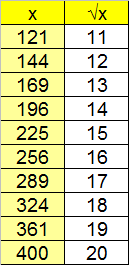
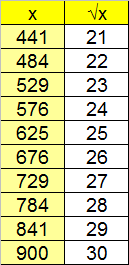
First 50 Square Roots
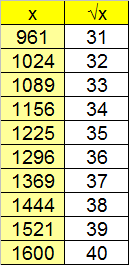
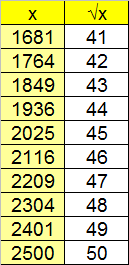
Symbols for other roots:
Examples
Cube root
\[ \sqrt[3]{8} = 2 \] \[ \text{because } 2 \times 2 \times 2 = 8 \]Fourth root
\[ \sqrt[4]{16} = 2 \] \[ \text{because } 2^4 = 16 \]General nth root
\[ \sqrt[n]{a} \] \[ \text{is the number which, multiplied by itself } n \text{ times, equals } a. \]Rectangular Numbers
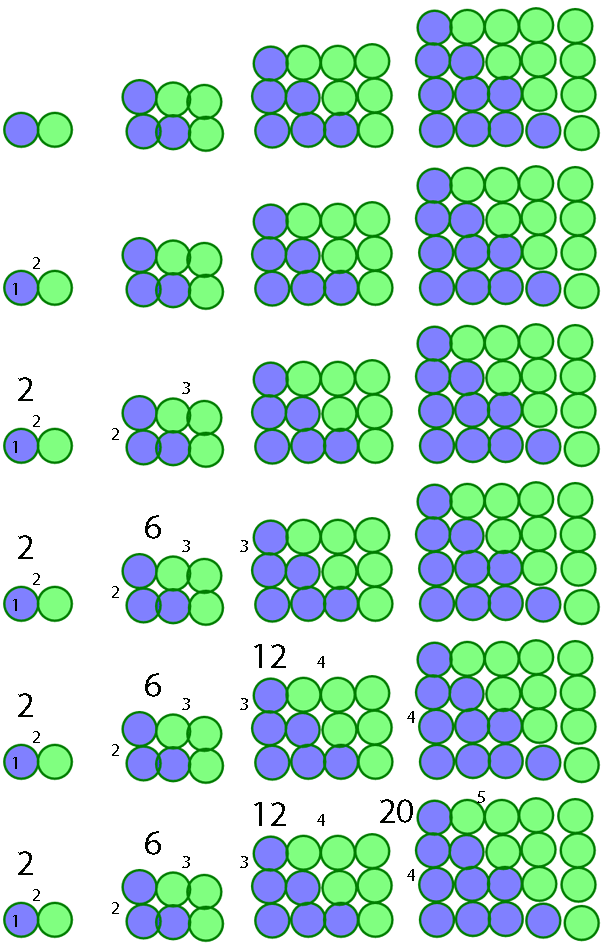
Rectangular numbers are formed by arranging objects into a rectangle. They come from multiplying two whole numbers together.
\[
2 \times 3 = 6
\]
\[
3 \times 4 = 12
\]
\[
4 \times 5 = 20
\]
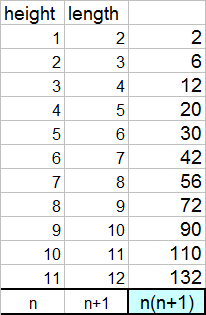
leading to:
\[
n(n+1)
\]
\[
\text{is always a rectangular number.}
\]
Triangular Numbers
Starting with rectangular numbers:
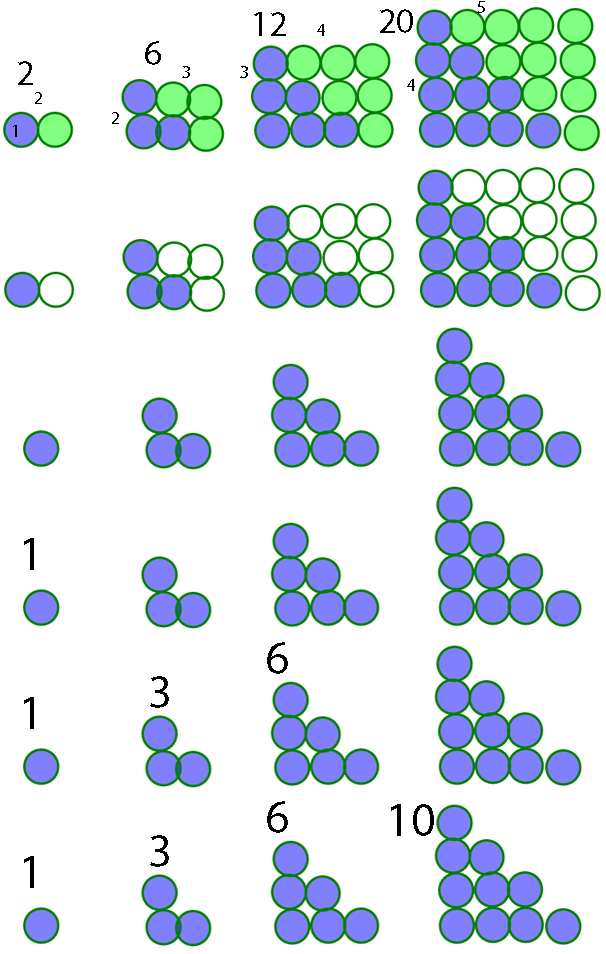
or:
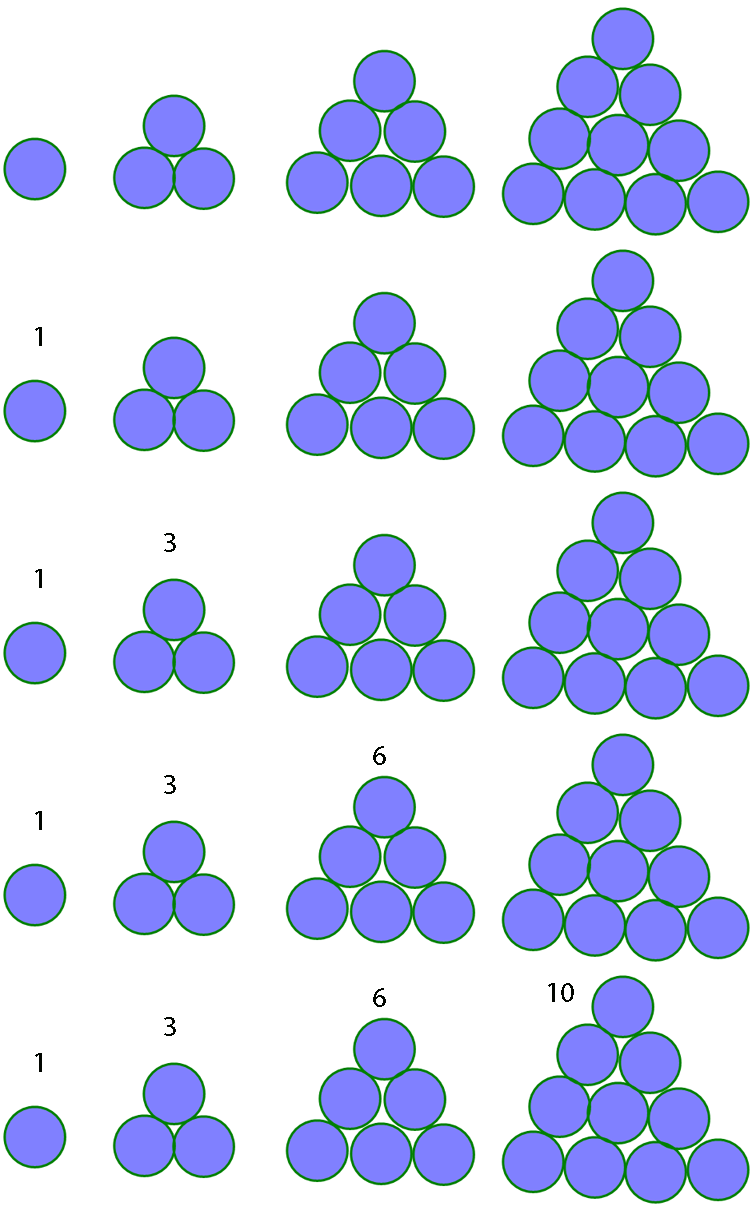
Since triangular numbers are half of rectangular numbers:
\[
T_n = \frac{n(n+1)}{2}
\]
\[
\text{This formula generates the } n^\text{th} \text{ triangular number.}
\]