Similarity and Congruence
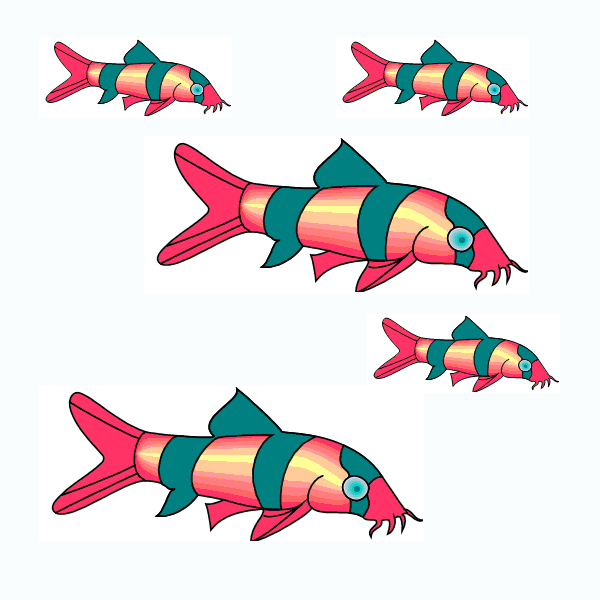
Two objects are similar if they have the same shape, so that one is an enlargement of the other.
Two objects are congruent if they have the same shape and size.
Scale Models and Factors
In an enlargement or reduction:
- Corresponding angles are equal
- Corresponding lengths are in the same ratio (same scale factor)
- Scale factor > 1 → enlargement
- Scale factor < 1 → reduction
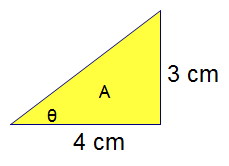
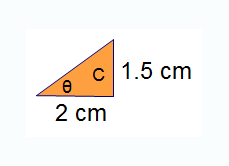
Triangle A is an enlargement of C with scale factor 2.
Triangle C is a reduction of A with scale factor \( \tfrac12 \).
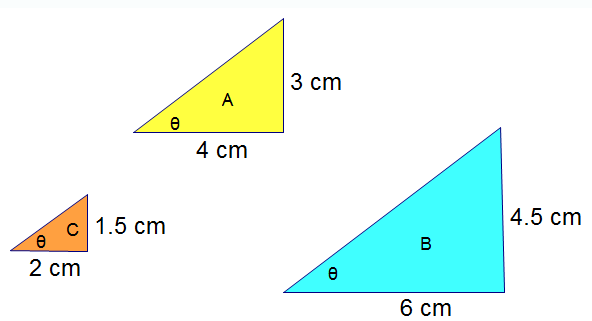
Triangle B is an enlargement of C with scale factor 3.
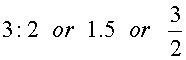
Triangle B is an enlargement of A with scale factor 1.5.
Calculations with Similar Shapes
Two shapes are similar if one is a scaled version of the other. This means:
- Corresponding angles are equal
- Corresponding sides are in the same ratio (same scale factor)
Are these dominoes similar?
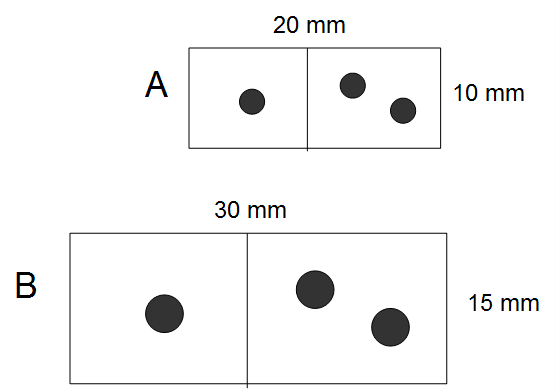
- All angles are right angles → equal
- Check ratios of corresponding sides
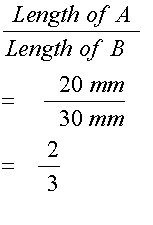
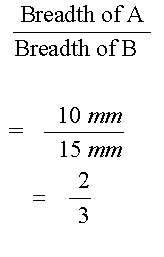
The dominoes are similar.
Missing Sides
Start with the shape containing the missing side.
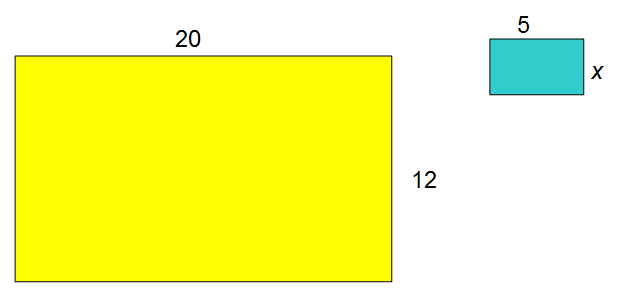
Calculate the size of side x.
Similar Triangles
For any triangle: If pairs of corresponding angles are equal, then ratios of corresponding sides are equal → triangles are similar.
Conversely, if ratios of corresponding sides are equal, then corresponding angles are equal → triangles are similar.
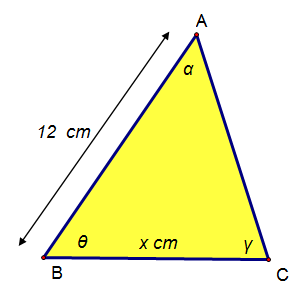
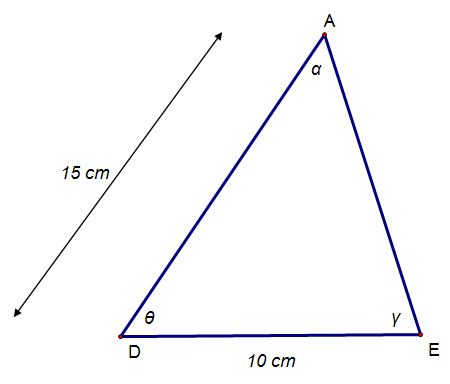
Given AD = 15 cm, AB = 12 cm, DE = 10 cm, find BC.
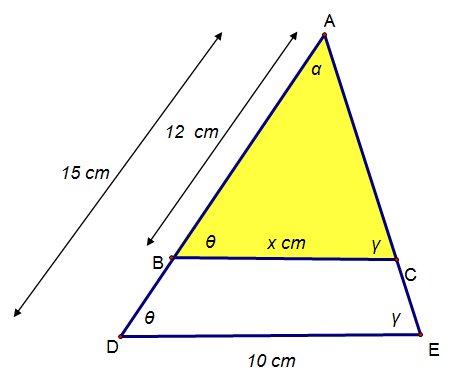
BC is parallel to DE → corresponding angles equal → triangles ABC and ADE are similar.
Split the triangles into components:
Scaled Area
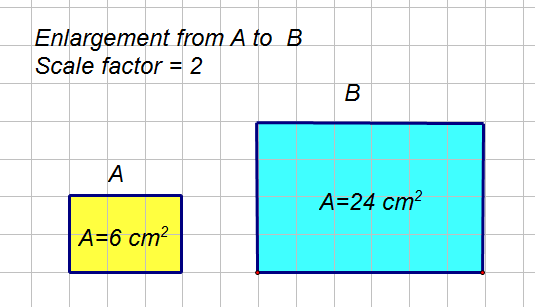
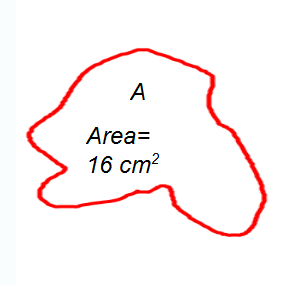
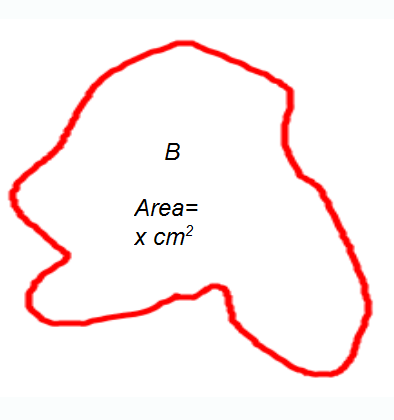
Shape A is enlarged by scale factor 2. Find the area of shape B.
Scaled Volume
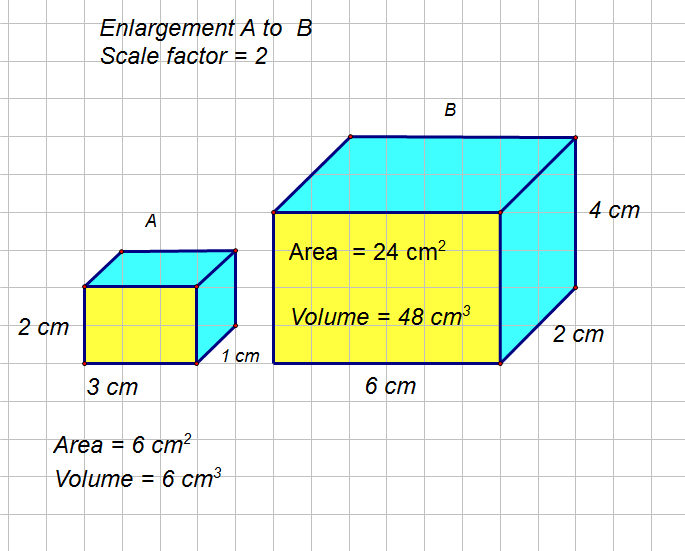
Wiffoff deodorant is sold in 200 ml cans. A new can has half the dimensions. Find its volume.
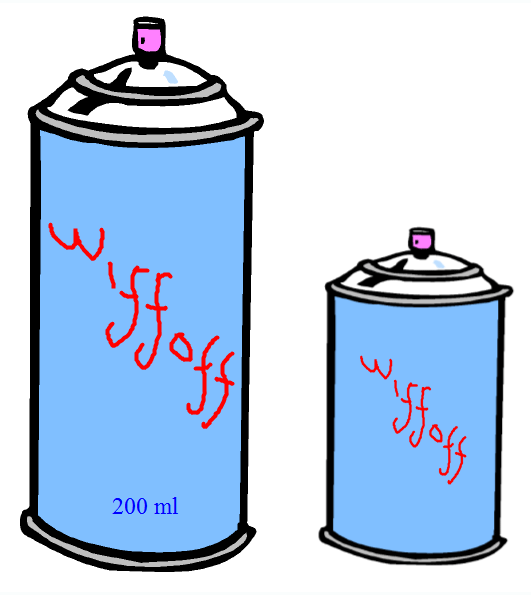
The new can has a volume of 25 ml.