Interior and Exterior Angles
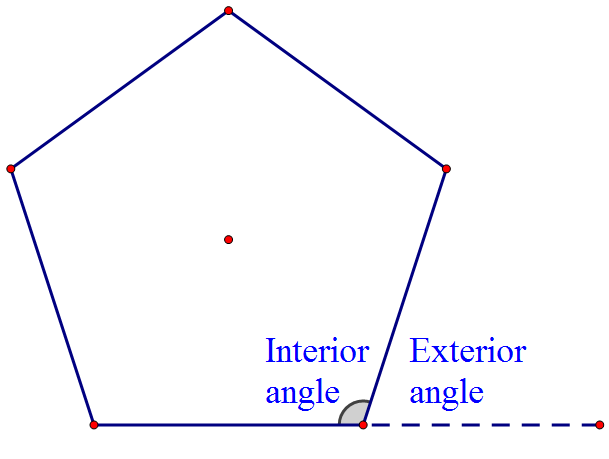
For a regular polygon with \(n\) sides, the interior and exterior angles follow simple rules.
For a regular polygon with \(n\) sides, the interior and exterior angles follow simple rules.
\[ \theta_{\text{int}} = \frac{(n-2)\times 180^\circ}{n} \]
This comes from the fact that any \(n\)-sided polygon can be divided into \((n-2)\) triangles.
\[ \text{Sum of interior angles} = (n-2)\times 180^\circ \]
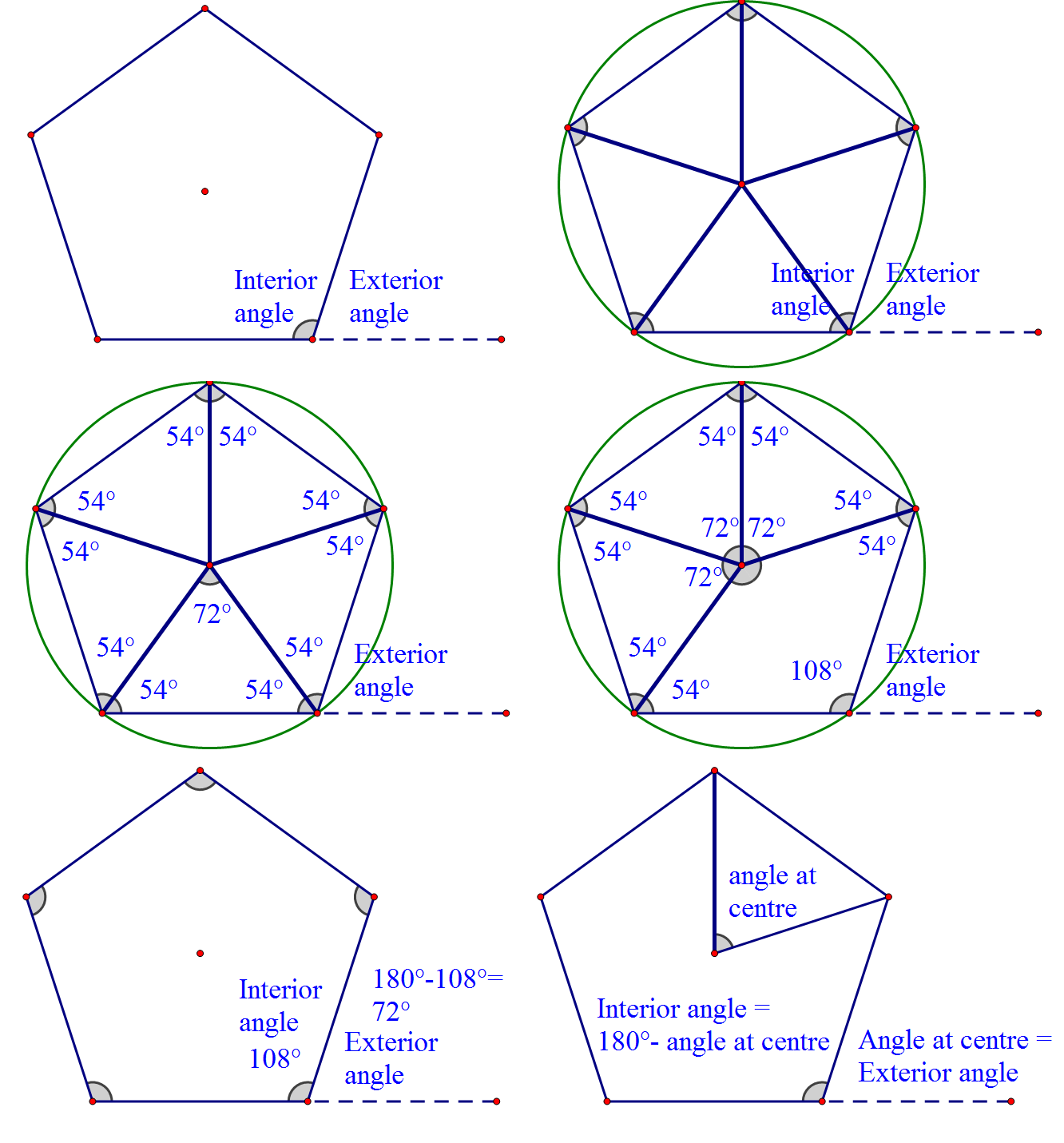
Each interior angle and exterior angle form a straight line:
\[ \theta_{\text{int}} + \theta_{\text{ext}} = 180^\circ \]
The exterior angles of any polygon always add up to \(360^\circ\), so each one is:
\[ \theta_{\text{ext}} = \frac{360^\circ}{n} \]
Triangle (\(n=3\)): \[ \theta_{\text{int}} = 60^\circ,\quad \theta_{\text{ext}} = 120^\circ \]
Square (\(n=4\)): \[ \theta_{\text{int}} = 90^\circ,\quad \theta_{\text{ext}} = 90^\circ \]
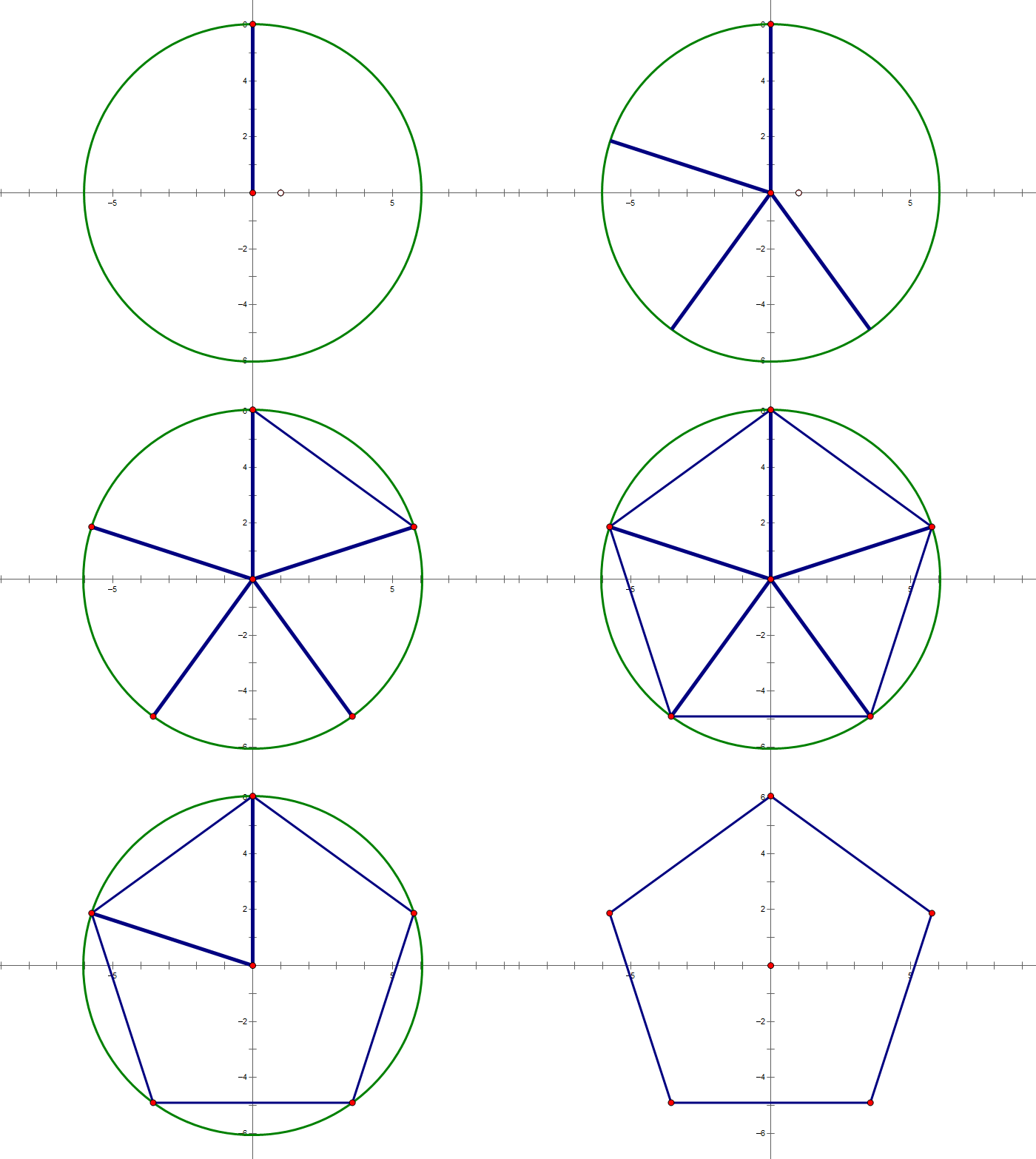
Pentagon (\(n=5\)): \[ \theta_{\text{int}} = 108^\circ,\quad \theta_{\text{ext}} = 72^\circ \]
 © Alexander Forrest