Sequences
A sequence is a list of numbers. A sequence has terms and values. The term number is often written as \(n\).
Tom, Mary, Jane and Jack are all standing in a queue. Tom is at rhe front of the queue.
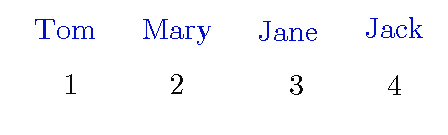
Since Tom is first , he is the first term , n= 1
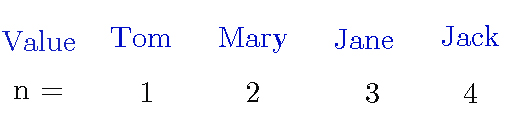
The value of \(n = 1\) is Tom. The value of \(n = 3\) is Jane. Jack is the fourth term.
3, 6, 9, 12, 15, 18 , 21,...
The value of \(n = 1\) is 3 , so 3 is the first term.
The value of \(n = 4\) is 12 , so 12 is the fourth term.
The number 15 appears fifth in the list, so is term \(n = 5\) .
To find the rule of a sequence
- Write out the sequence.
- Write the term numbers underneath.
- Find the difference between the values.
- If the difference is constant, multiply \(n\) by this number.
- Leave a gap, draw a line, copy the sequence again.
- Find the constant needed to match the sequence values.
- Write the expression for the \(n\)th term.
Find the rule for the sequence: 5, 8, 11, 14…
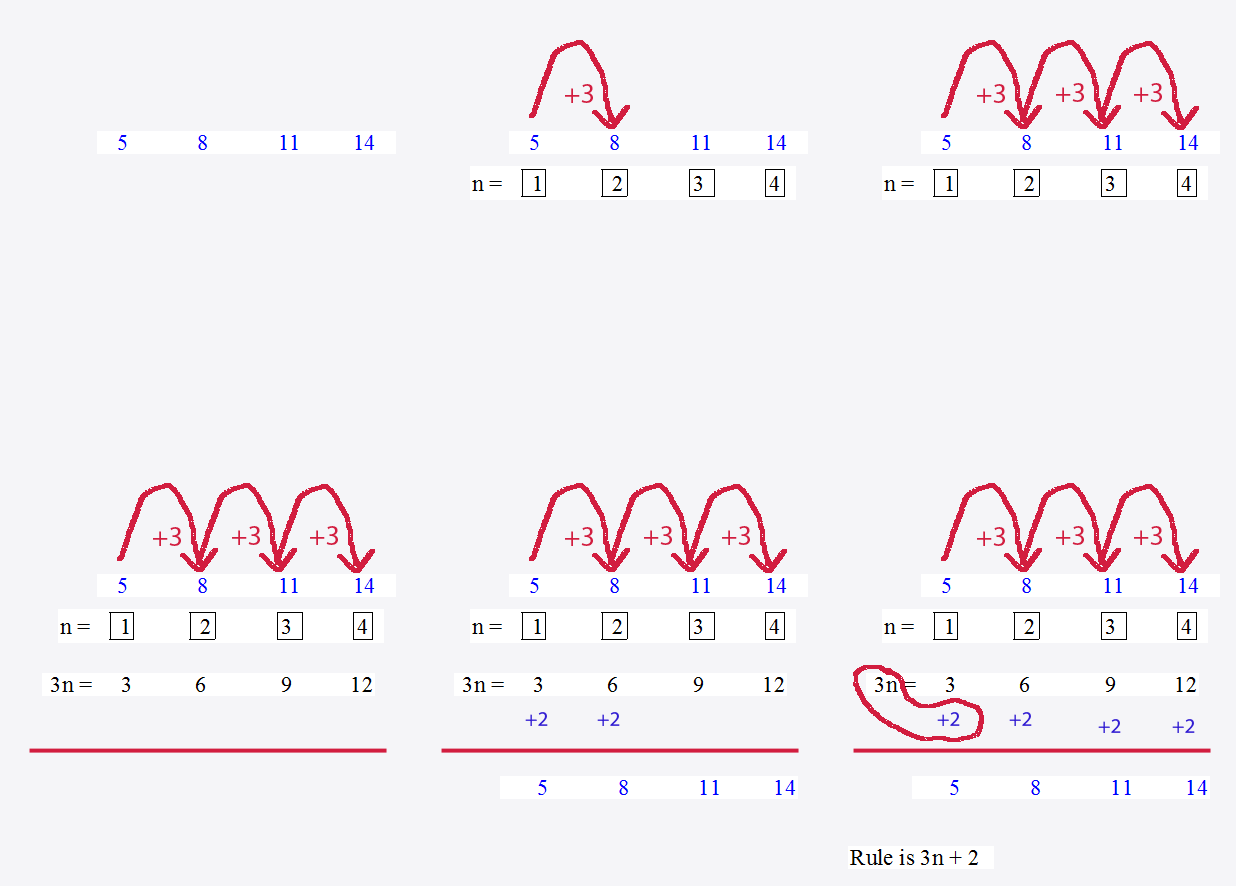
The rule is \(3n + 2\).
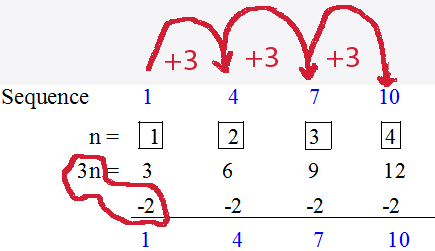
Given the sequence 1, 4, 7, 10…
a) Find the next three numbers in the sequence.
b) What is the rule for the nth term of this sequence ?
c) Find the value of the 20th term.
d) What term has a value of 61 ?
a) Next three terms: 13, 16, 19
b) Rule for the nth term:
c) Value of the 20th term:
d) Which term has value 61?
Picture Sequences
Find the rule connecting bars \(b\) to dots \(d\):
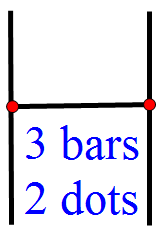
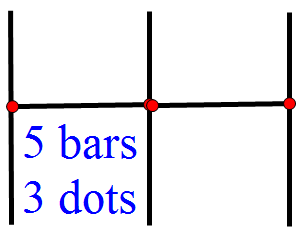
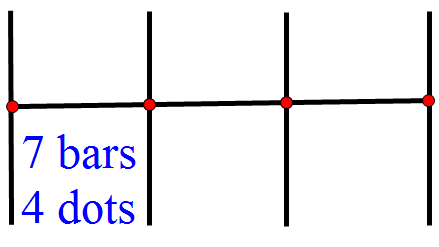
Each time a dot is added, 2 bars are added.
Write the term number above the pictures:
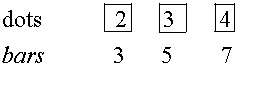
n has been replaced by d
Proceed as before:
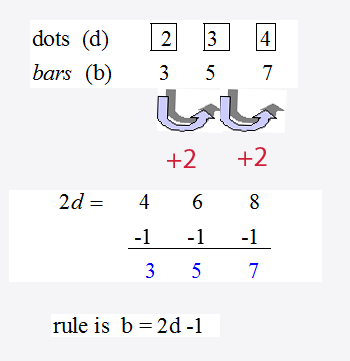
To find the number of bars, double the number of dots and subtract 1
How many bars for 52 dots?
How many dots for 51 bars?
Non-constant Difference
If the difference between values is not constant, look for a constant between the differences.
The nth term will contain \(an^2\), where \(a = \frac{k}{2}\).
Square each term, then multiple by ½k
Find the rule for the sequence: 6, 18, 38, 66…
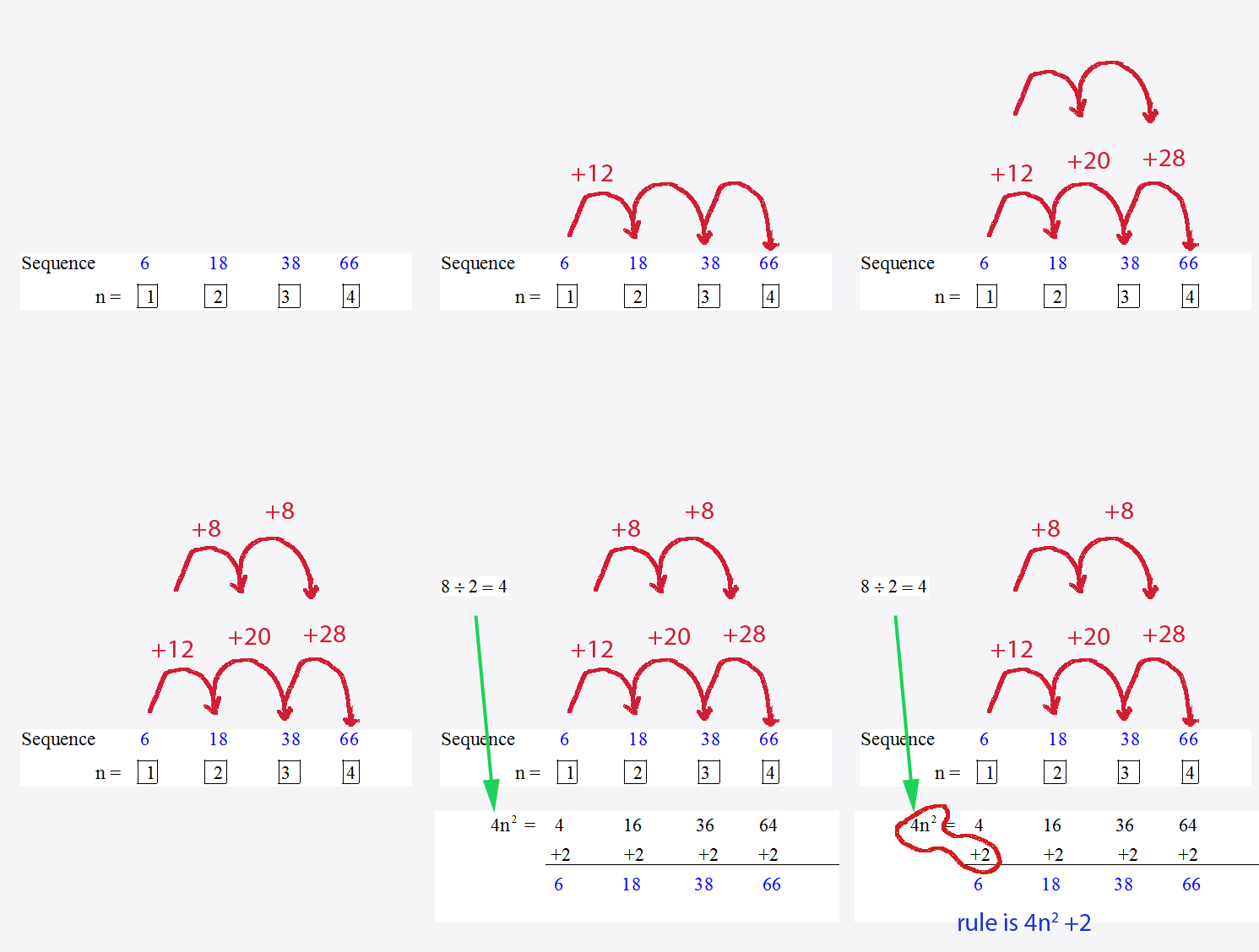
Check for \(n = 2\):