The Rule of Three
The Rule of Three is used to find the value of a fourth quantity when the relationship of two quantities is fixed and the value of the third quantity is known.
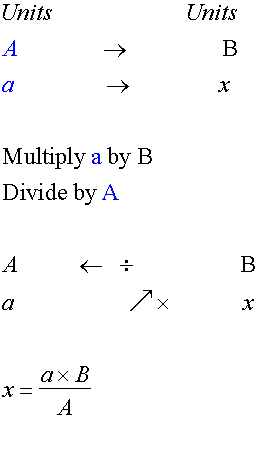
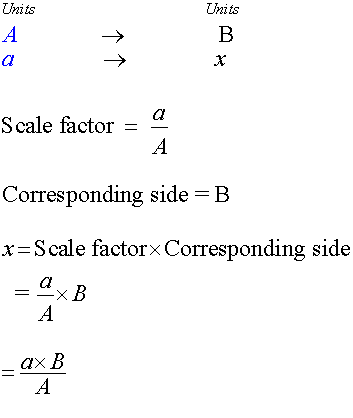
For direct proportion:
- Align the data in correct columns
- Multiply the 3rd data by the 2nd
- Then divide by the 1st
The data must have the same units.
Find \(x\) given \(A\), \(B\) and \(a\).
More Direct Proportion Examples
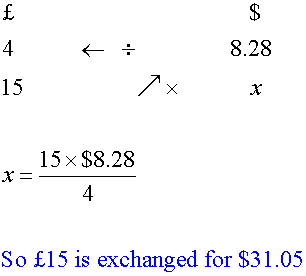
If £4 is exchanged for $8.28, how many dollars will £15 be exchanged for?
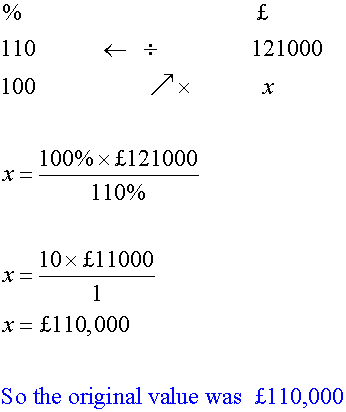
A house has appreciated by 10%. If it is now valued at £121,000, what was the original value?
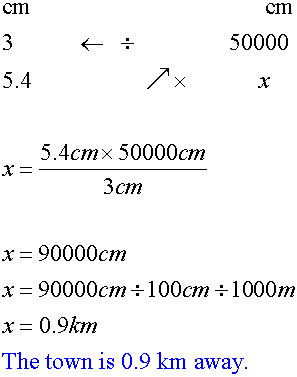
A map has scale 3 : 50000. What is the real-life distance to a town if the map distance is 5.4 cm? Give your answer in kilometres.
Why does it work?
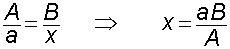
This is effectively the same as finding the scale factor and multiplying by the corresponding side:
Indirect Proportion
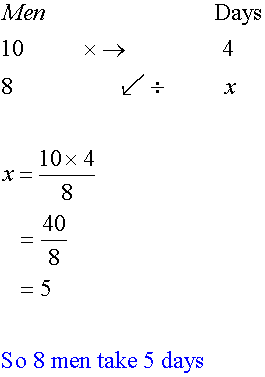
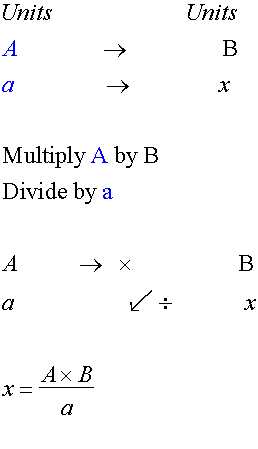
For indirect proportion, go backwards:
- Align the data in correct columns
- Multiply the 1st data by the 2nd
- Then divide by the 3rd
If it takes 4 days for 10 men to dig a trench, how long will it take 8 men?